
Terrarium Lighting Guide: How to Choose the Right Grow Lights for Plants and Animals
Lighting is one of the most critical — and most misunderstood — aspects of terrarium keeping. Whether you're building a lush bioactive vivarium, a reptile enclosure, or an indoor plant setup, the quality and spectrum of your light source directly impacts the health of everything living inside. In this terrarium lighting guide, we'll break down the key metrics you need to understand — PAR, PPFD, Kelvin, and spectrum — and explain how to choose the right lighting for your specific setup.
Why Terrarium Lighting Matters
Plants and animals in terrariums depend on light for far more than just visibility. For plants, light is the energy source that drives photosynthesis — the process by which they convert light into the sugars they need to grow. Without adequate light intensity and the right spectrum, plants become leggy, pale, and eventually decline.
For animals, light plays an equally important role. Reptiles rely on UVB light to synthesize Vitamin D3, which is essential for calcium metabolism and bone health. Many amphibians and invertebrates also benefit from natural light cycles that regulate behavior, feeding, and reproduction. Getting your lighting right isn't just about aesthetics — it's about the long-term health of your entire ecosystem.
Understanding PAR: Photosynthetically Active Radiation
PAR (Photosynthetically Active Radiation) refers to the range of light wavelengths — between 400 and 700 nanometers (nm) — that plants can use for photosynthesis. This range covers the visible spectrum from violet to red, and it's the portion of light that actually does the work of driving plant growth.
When evaluating a grow light or terrarium light, PAR is one of the first numbers to look at. A higher PAR output means more usable light energy is being produced. However, PAR alone doesn't tell the whole story — you also need to know how much of that light actually reaches your plants, which is where PPFD comes in.

Understanding PPFD: Photosynthetic Photon Flux Density
PPFD (Photosynthetic Photon Flux Density) measures the amount of PAR light that actually reaches a specific surface — in this case, your plants or animals — per second. It's measured in micromoles per square meter per second (μmol/m²/s) and is the most practical metric for evaluating how effective a light will be in your enclosure.
Here are general PPFD guidelines for common terrarium applications:
- Low-light plants (ferns, mosses, pothos): 50–150 μmol/m²/s
- Medium-light plants (most tropical species): 150–400 μmol/m²/s
- High-light plants (orchids, bromeliads, succulents): 400–800+ μmol/m²/s
- Reptile basking zones: varies by species, but UVB index and heat are typically more important than PPFD
When shopping for terrarium lights, look for manufacturers that publish actual PPFD measurements at specific distances — this is the most honest and useful data they can provide.
Understanding Kelvin: Color Temperature
Kelvin (K) describes the color temperature of a light source — essentially, how warm or cool the light appears. Lower Kelvin values produce warmer, more reddish-orange light, while higher Kelvin values produce cooler, bluish-white light.
For terrarium use, Kelvin matters because different plants and animals have different preferences:
- 5000–6500K — ideal for most plants; mimics bright daylight and promotes strong vegetative growth
- 3000–4000K — warmer tones that can support flowering and fruiting in some plant species
- Blended spectrums — many high-quality terrarium lights combine multiple Kelvin temperatures to provide a broader, more natural light profile

At Thrive Ecosystems, our lights use a blended 5000K/6500K color temperature, which delivers the bright, full-spectrum light that plants thrive under while maintaining a natural, visually appealing appearance for your enclosure.
Understanding Spectrum: Why Full Spectrum Matters
Beyond Kelvin and PAR, the specific spectral output of a light — meaning which wavelengths it produces and in what proportions — has a significant impact on plant and animal health.
Here's a quick breakdown of how different parts of the spectrum affect your terrarium:
- Blue light (400–500nm) — drives vegetative growth, compact leaf structure, and strong root development
- Green light (500–600nm) — penetrates deeper into the plant canopy and contributes more to photosynthesis than previously thought
- Red light (600–700nm) — essential for flowering, fruiting, and overall plant energy production
- Far-red light (700–750nm) — influences plant morphology and can accelerate growth cycles
For animals, a broad, full-spectrum light that mimics natural sunlight is ideal. It supports natural behavior, circadian rhythms, and — for reptiles — proper UVB exposure when combined with appropriate UVB-emitting bulbs.
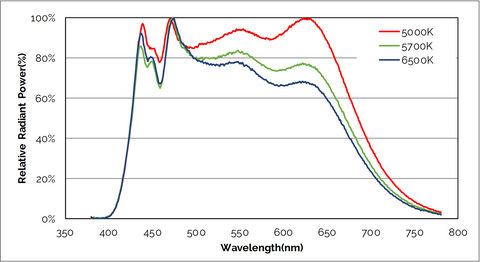
Thrive Ecosystems Lighting: Built for Terrariums
At Thrive Ecosystems, we designed our lighting line specifically for terrarium and vivarium applications — not repurposed from general horticulture or office lighting. Our lights deliver:
- High PAR and PPFD output optimized for the distances typical in terrarium setups
- Blended 5000K/6500K spectrum for broad-spectrum plant and animal support
- High-quality German LED technology for energy efficiency, longevity, and consistent output over time
- High lumen output that makes your enclosure look stunning while supporting healthy growth
We also build our products with sustainability in mind — using recycled materials in packaging, minimizing shipping lanes, and designing lights that are upgradable and repairable rather than disposable.
Quick-Reference Lighting Checklist
- Check PAR range — ensure the light covers 400–700nm
- Check PPFD at distance — match to your plant's light requirements
- Choose 5000–6500K for most plant-forward terrariums
- Look for full-spectrum output with blue, green, and red wavelengths represented
- Consider UVB output separately if keeping reptiles that require it
- Use a timer to maintain consistent photoperiods (12–16 hours for most setups)
Final Thoughts
Choosing the right terrarium lighting doesn't have to be overwhelming. Once you understand PAR, PPFD, Kelvin, and spectrum, you have the tools to evaluate any light on the market and make a confident decision for your setup. And if you want a light that's been purpose-built for terrariums with all of these factors already dialed in, our Thrive Ecosystems lighting line is the place to start.
Browse our full terrarium lighting collection here and find the right light for your enclosure today.